
PUBLICATIONS

Address:
D-1, Green Park, Ashirwad
Complex ,New Delhi - 110016, India
Contact Number:
011-41759907,
011-41004554
Email:
contact@cpkukrejafoundation.org
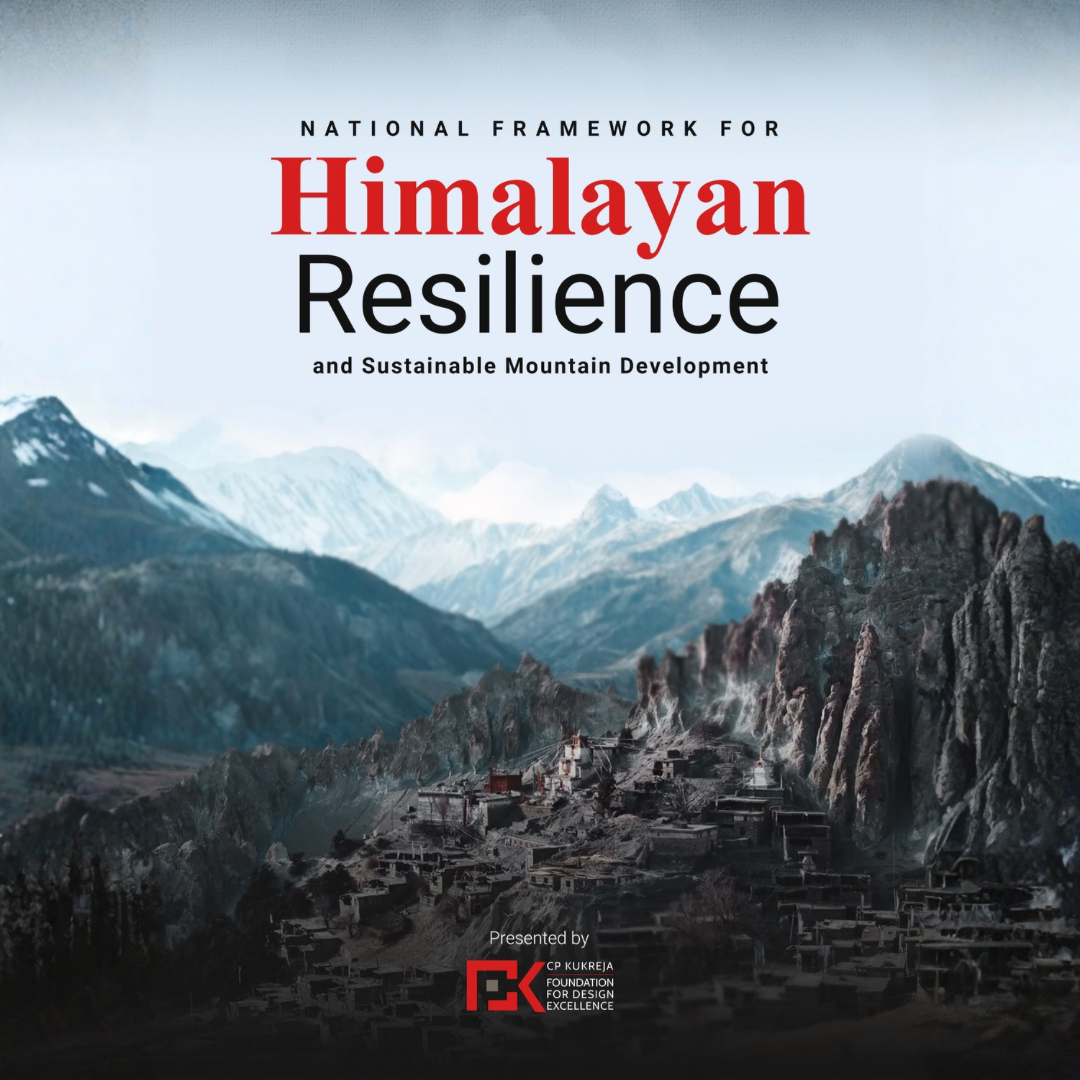
National Framework for Himalayan Resilience and Sustainable Mountain Development
The Himalayas are among India's most vital ecological and cultural landscapes, yet they face mounting pressures from climate change, rapid urbanisation, infrastructure expansion, and environmental degradation. As these challenges intensify, the need for a more resilient and mountainsensitive approach to development has become increasingly urgent.
Developed through a series of interdisciplinary consultations convened by the CP Kukreja Foundation for Design Excellence (CPKF), National Framework for Himalayan Resilience and Sustainable Mountain Development brings together perspectives from experts across climate science, ecology, geology, hydrology, planning, architecture, infrastructure, governance, and disaster resilience. The publication explores practical pathways towards sustainable development that is ecologically responsible, climate-responsive, and rooted in the unique realities of mountain regions.
This publication contributes to the growing national dialogue on the future of the Indian Himalayas and presents a framework for balancing development with long-term environmental stewardship.
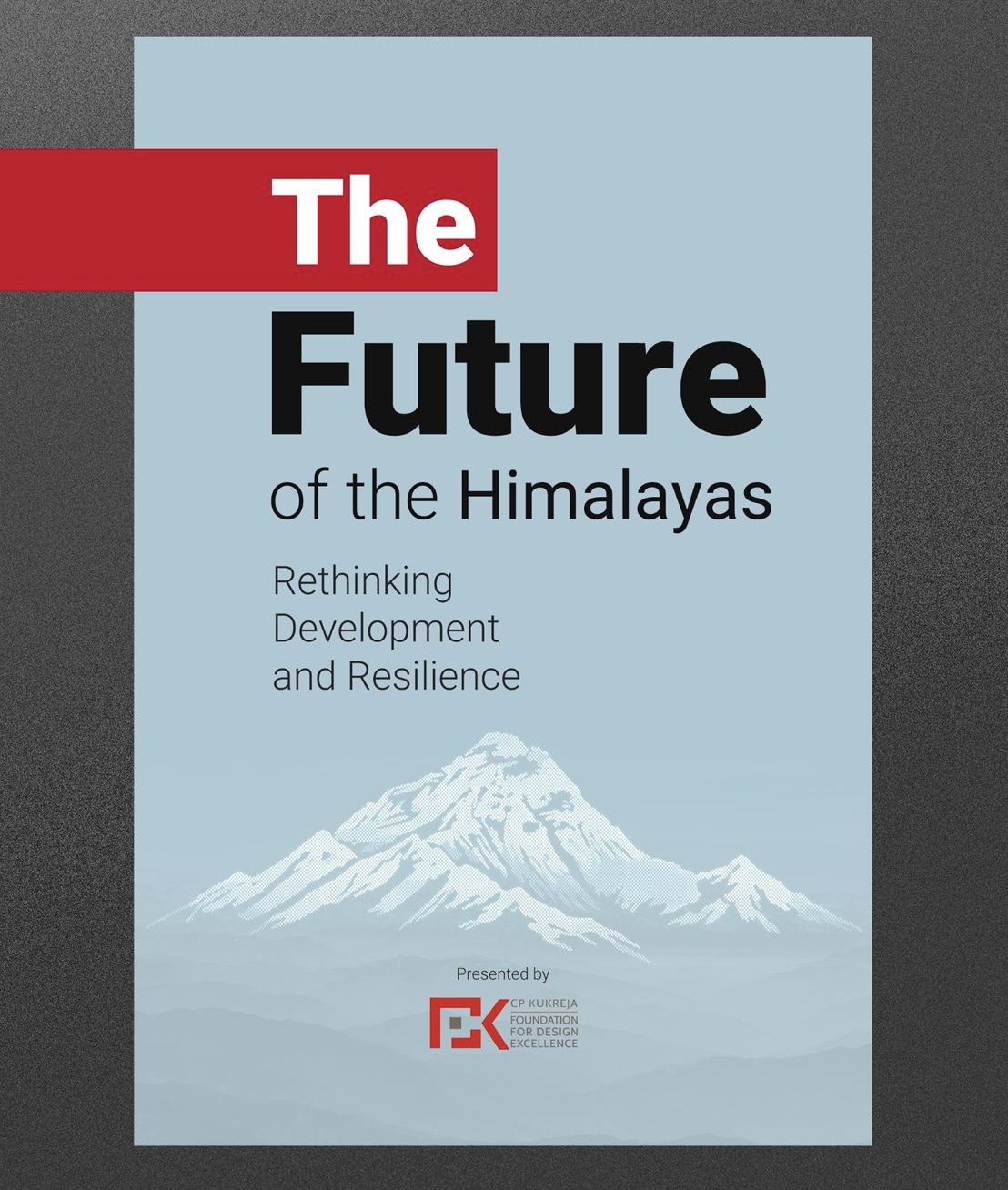
THE FUTURE OF THE HIMALAYAS
The Himalayas are changing. In many places, those changes are no longer
gradual. They are visible in the form of landslides, shifting water systems,
and infrastructure that struggles to hold under new conditions. These are
often treated as isolated events, but they point to something more
fundamental. Across the region, development continues to move forward –
roads expand, settlements grow, tourism intensifies. Much of this is
necessary. But it is also happening in a landscape that does not respond
well to decisions made in isolation. This White Paper brings together
perspectives from across disciplines to look at this condition more closely.
What emerges is not a lack of knowledge, but a lack of alignment — between
deeply interconnected systems, and processes that remain fragmented. The
Himalayas do not behave like a collection of separate problems. They
function as a system. And when interventions fail to account for that, the
consequences are not always immediate, but they are rarely contained. Many
of these changes are not simply difficult to reverse; they are, in effect,
terminal. This document does not attempt to offer a single solution.
Instead, it tries to reframe the question — from how development can
continue, to how it can be better understood in relation to the systems it
depends on. Because the issue is not whether change will happen. It already
is.
Email us at contact@cpkukrejafoundation.org
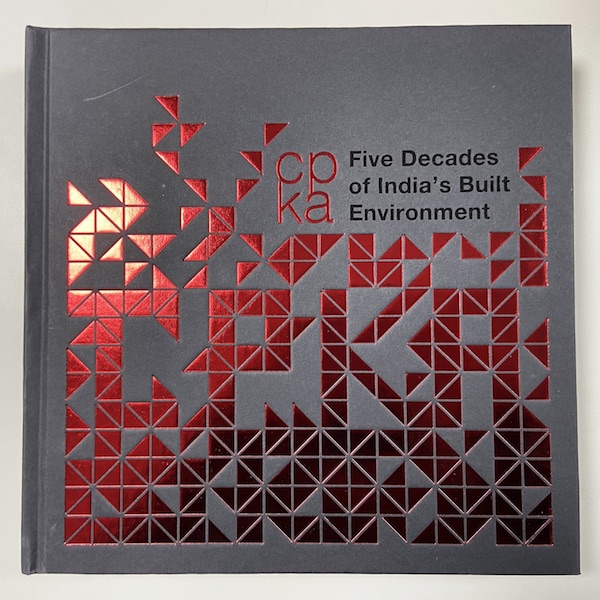
Five Decades of India's Built Environment
Five Decades of India's Built Environment’ presented by CP Kukreja Foundation encapsulated a profound exploration into the evolution of India's architectural landscape. This insightful retrospective journeyed through five decades of architectural prowess, showcasing the transformative milestones that have shaped the nation's built heritage.
Featuring an array of architectural marvels and pioneering designs, this comprehensive exposition celebrated the diverse narratives woven into India's urban fabric. With a focus on innovation, sustainability, and cultural integration, the exhibition highlighted the integral role architecture plays in shaping India's identity and societal progress, serving as an inspiring tribute to India's architectural legacy.

Tropical Architecture by C. P. Kukreja
Tropical Architecture’ authored by CP Kukreja stands as an illuminating chronicle and guidebook exploring architectural principles tailored for tropical climates. This definitive work delves into the intricacies of designing in regions characterized by unique climatic challenges, offering comprehensive insights and innovative solutions.
Drawing from decades of expertise and a deep understanding of tropical contexts, this book navigates through sustainable design strategies, emphasizing climate-responsive architecture, passive cooling techniques, and harmonious integration with the natural environment. 'Tropical Architecture' serves as a valuable resource, guiding architects and enthusiasts toward creating environmentally conscious, functional, and aesthetically pleasing structures that thrive in tropical settings.
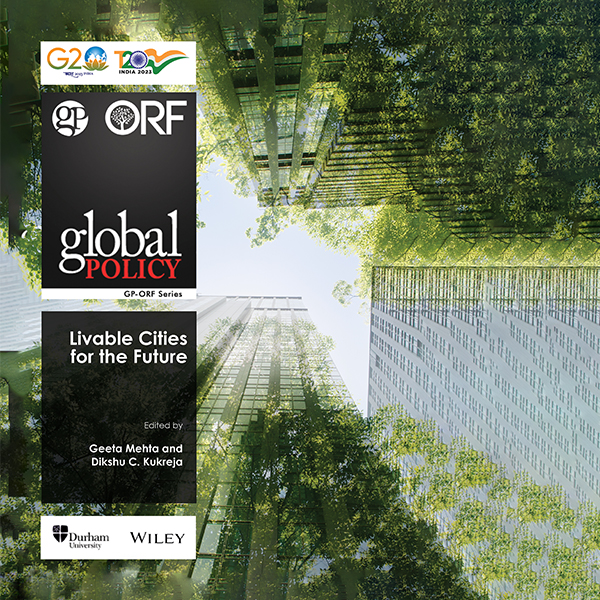
Livable Cities for the Future (A Think 20 initiative)
Co-edited by Dikshu C. Kukreja, Managing Principal at CP Kukreja Architects, and Geeta Mehta, the Founder of Asia Initiatives and SoCCs (Social Capital Credits) and Adjunct Professor at Columbia University, US, Liveable Cities for the Future is a compendium of essays published by Observer Research Foundation (ORF) and launched at Think 20, an official Engagement Group of India’s 2023 G20 Presidency. The book brings together insights from some of the world’s most prominent experts and scholars in the fields of sustainability and urban design. At the heart of this compendium lies the recognition that expertise and innovation are not confined to specific geographical regions or disciplines. The contributors of the compendium represent diverse cultures, backgrounds, and areas of expertise, fostering a global dialogue that transcends borders and disciplinary boundaries.
Featuring esteemed scholars such as Guilherme Lassance from Rio de Janeiro, Brazil; Saskia Sassen from New York, US; Sara Roversi from Bologna; Tetsuo Kidokoro and Norihisa Shina from Tokyo, Japan and more. This collaborative effort underscored the need for holistic urban planning, addressing factors like environmental sustainability, community well-being, infrastructure innovation, and social inclusivity. The compendium serves as a milestone in promoting international dialogue and shaping actionable strategies for crafting cities that prioritize livability and sustainable futures

CP Kukreja Design Trophy 2022-23 Book
The CP Kukreja Design Trophy 2022-2023, hosted by NASA India in collaboration with the CP Kukreja Foundation for Design Excellence, celebrated young architectural talent by inviting student -led design interventions that reimagine public spaces with historical or cultural significance. The trophy encouraged participants to propose installations that not only resonate with national pride but also address contemporary urban challenges, fostering a vision of an inclusive, forward -looking India. This compilation presents the winning entries, highlighting innovative concepts that blend architectural creativity with social impact, setting a precedent for the future of public space design in India.